
The Salem Witch Trials Revisited:
- Satanic Lives Matter Admin

- Aug 12
- 16 min read
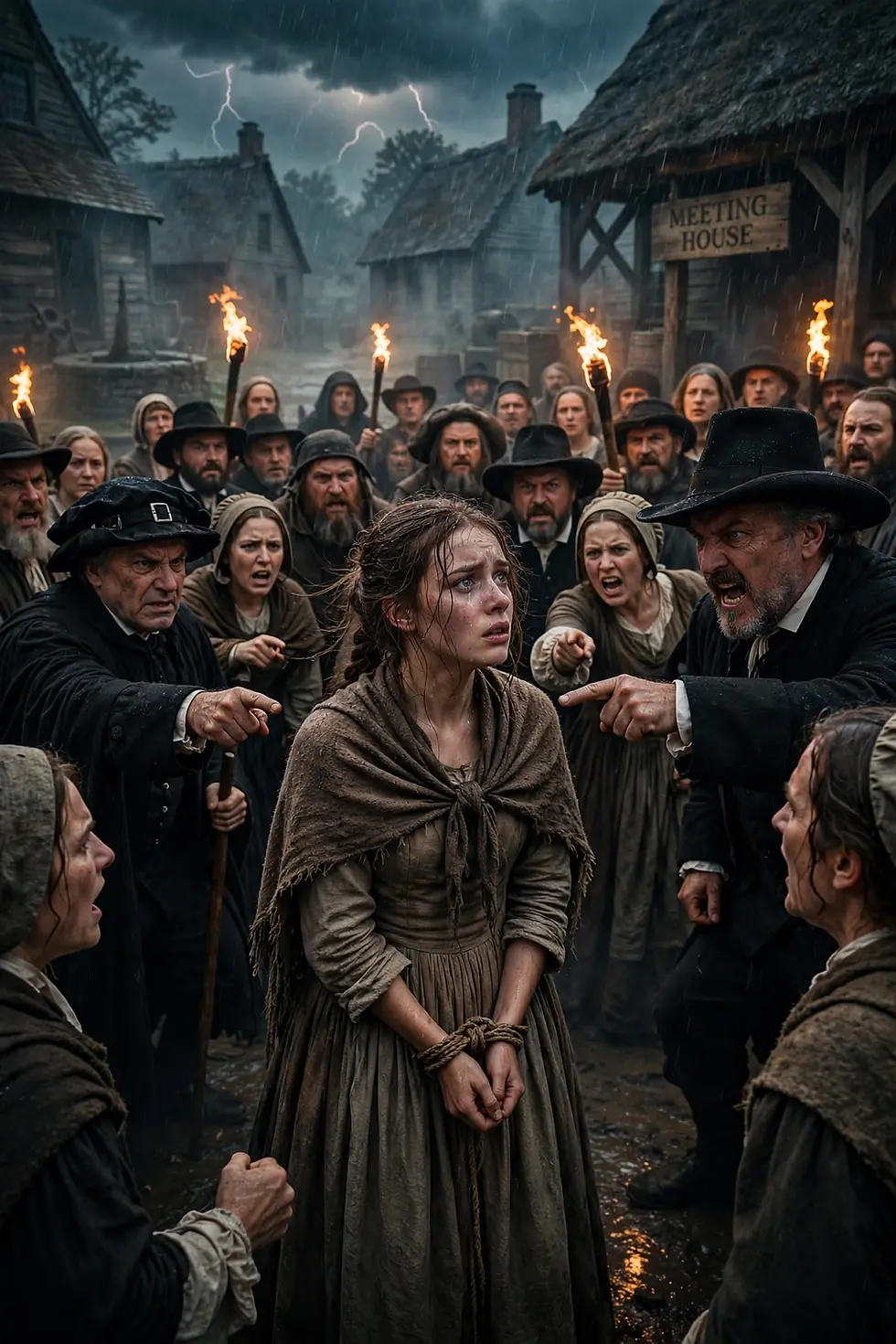
The Salem Witch Trials of 1692 remain one of the most examined and controversial events in early American history. The trials have long served as a warning about the consequences of mass fear, religious extremism, and failures within systems of justice. In the small Puritan community of Salem Village, Massachusetts, accusations of witchcraft rapidly developed into a widespread crisis that resulted in the imprisonment of more than one hundred people, the execution of twenty individuals, and lasting damage to the social fabric of the colony. Although the events are often remembered as an example of irrational superstition, modern historical scholarship has demonstrated that the Salem crisis was far more complex. The trials were shaped by political instability, economic divisions, religious beliefs, gender expectations, and weaknesses within colonial legal institutions.
Revisiting the Salem Witch Trials requires moving beyond the simplistic interpretation that the people of 1692 were merely victims of ignorance or hysteria. The individuals involved lived within a worldview where supernatural forces were considered real and where the presence of evil represented a direct threat to the survival of the community. Puritan society was built around religious discipline and the belief that moral failures could bring divine punishment upon the entire population. Within this environment, accusations of witchcraft became a powerful tool through which fears and conflicts could be expressed.
Historians have increasingly emphasized that the Salem Witch Trials were not caused by a single factor. Instead, they emerged from the interaction of multiple pressures affecting late seventeenth-century Massachusetts. Political uncertainty following changes in colonial government, economic disputes between Salem Village families, fears caused by warfare on the colonial frontier, and conflicts over religious authority all contributed to a society vulnerable to crisis. The trials exposed the dangers of allowing fear and suspicion to influence legal decisions, particularly when courts accepted unreliable forms of evidence and abandoned traditional protections for the accused.
This historical analysis argues that the Salem Witch Trials were not simply an outbreak of superstition but a reflection of deeper social, political, and institutional tensions within Puritan New England. By examining the religious beliefs, community conflicts, legal practices, and historical interpretations surrounding the trials, it becomes clear that Salem represents a significant example of how societies under stress can transform uncertainty into persecution.
The Historical Setting of Salem Village
To understand the Salem Witch Trials, it is necessary to examine the environment in which they developed. In the late seventeenth century, Massachusetts Bay Colony was a deeply religious society governed by Puritan ideals. The Puritans had established their colony with the goal of creating a society based on their interpretation of Christianity. They believed that they had entered into a covenant with God and that their community had a special religious mission. As a result, maintaining moral and spiritual order was considered essential not only for individual salvation but also for the survival of the colony itself.
Puritan beliefs strongly influenced the way colonists interpreted unusual events. Illness, natural disasters, crop failures, and military conflicts were often viewed as signs of divine displeasure or evidence of Satan’s influence. Unlike modern societies that typically separate religious explanations from political and scientific interpretations, seventeenth-century Puritans understood the spiritual and physical worlds as closely connected. The possibility that Satan could influence individuals through witchcraft was therefore not considered unrealistic; it was viewed as a serious religious and social danger.
However, beneath this religious unity existed significant divisions. Salem Village, where the accusations began, was a farming community located near the wealthier and more commercially successful Salem Town. The two communities differed economically and socially. Salem Town benefited from trade and maritime activity, while Salem Village depended largely on agriculture. These differences created resentment and competition among residents. Families disagreed over issues such as taxation, land ownership, church leadership, and local authority.
The village itself was divided between competing factions. Some residents supported the leadership of Reverend Samuel Parris, who became the minister of Salem Village in 1689. Others opposed him because they believed he demanded too much financial support and exercised excessive influence over community affairs. These disagreements were not simply personal conflicts; they represented larger struggles over religion, wealth, and power within the community.
At the same time, the colony experienced significant political uncertainty. In 1684, England revoked Massachusetts’ original charter, and following the Glorious Revolution of 1688, colonial leaders faced changes in government authority. The creation of a new charter in the early 1690s altered the political structure of Massachusetts and created uncertainty about leadership and legal traditions. Many colonists felt that the colony had lost some of the independence it previously possessed, contributing to a general atmosphere of instability.
External threats also influenced the fears of Salem residents. During this period, England and France were engaged in conflicts that affected North American colonies. Frontier communities in northern New England experienced violent attacks connected to these conflicts, forcing many settlers to relocate. Refugees arriving in Salem brought stories of destruction and trauma, increasing fears that the colony was surrounded by enemies. These experiences contributed to a belief that Satan was attacking the Puritan community through both external violence and internal corruption.
The combination of religious anxiety, political uncertainty, and social division created conditions where accusations of witchcraft could quickly gain acceptance. When several young girls in Salem Village began experiencing strange physical symptoms in early 1692, the community already possessed many of the fears necessary for a widespread crisis to develop.
The Role of Religion and Puritan Beliefs
Religion was central to the Salem Witch Trials because Puritan theology provided the framework through which accusations were understood. Puritans believed that Satan constantly attempted to weaken Christian communities by encouraging sin and spiritual corruption. Witchcraft was considered one of the most dangerous forms of rebellion against God because it represented an agreement between humans and the devil.
The idea of a personal relationship between witches and Satan was widely accepted throughout colonial New England. Ministers frequently warned their congregations about the dangers of temptation and moral failure. In this context, accusations of witchcraft were not viewed as ordinary criminal allegations. They represented a struggle between good and evil, with the entire community believed to be at risk.
Reverend Samuel Parris played a significant role in shaping the religious atmosphere of Salem Village. His household became the center of the initial crisis when his daughter Betty Parris and his niece Abigail Williams began experiencing unexplained symptoms. These symptoms included screaming, physical movements, and claims of being attacked by invisible forces. When medical explanations failed, community leaders interpreted the events as evidence of witchcraft.
The first accusations targeted individuals who occupied socially vulnerable positions. Tituba, an enslaved woman in the Parris household, was among the first accused. Sarah Good, a poor woman, and Sarah Osborne, an older woman involved in a property dispute, were also accused. Their social positions made them easier targets because they lacked the influence and protection available to wealthier members of the community.
The role of religion in the trials was complicated. While Puritan beliefs contributed to the acceptance of witchcraft accusations, religious leaders were not universally supportive of the persecution. Some ministers warned against accepting accusations without reliable evidence. Others later criticized the courts for allowing fear to replace careful judgment. However, during the height of the crisis, religious concerns about Satan’s influence encouraged many officials and citizens to believe that aggressive action was necessary.
The Salem crisis demonstrates how religious beliefs can shape interpretations of events during periods of uncertainty. The people of Salem did not view themselves as acting irrationally; many believed they were defending their community against a genuine spiritual threat. Understanding this perspective does not excuse the injustice of the trials, but it helps explain why accusations gained such powerful influence.
Political and Economic Causes Behind the Crisis
While religious beliefs provided the language through which Salem residents understood witchcraft, political and economic tensions created the conditions that allowed accusations to spread. The Salem Witch Trials occurred during a period of significant uncertainty in Massachusetts, when traditional sources of authority were being questioned and communities were struggling to adapt to changing circumstances.
One important factor was the relationship between Salem Village and Salem Town. Although they were geographically close, the two communities had different economic identities. Salem Town was a center of trade, commerce, and maritime activity, while Salem Village remained primarily agricultural. These differences contributed to disagreements over taxation, representation, and the role of local institutions. Many farmers in Salem Village believed that wealthier residents of Salem Town held too much influence over political and religious affairs.
The establishment of a separate church in Salem Village also reflected these tensions. Residents had struggled for years to create their own congregation rather than depend on Salem Town’s church. The hiring of Reverend Samuel Parris intensified existing divisions because his leadership style and financial demands created controversy. Some residents supported Parris because they believed he represented stronger religious discipline, while others viewed him as overly demanding and politically ambitious. These conflicts divided neighbors into opposing groups, and many later accusations of witchcraft followed these existing social divisions.
Historian Paul Boyer and Stephen Nissenbaum, in their influential analysis of Salem, argued that the accusations reflected underlying conflicts between different factions within the community. They suggested that many accusers came from families associated with the more traditional agricultural interests of Salem Village, while many accused individuals were connected to wealthier or more socially independent groups. Although historians continue to debate the extent of economic motivations behind specific accusations, there is broad agreement that Salem’s social tensions influenced the direction of the crisis.
Property disputes also played a role in shaping accusations. In colonial New England, land represented not only economic security but also social status and family reputation. Conflicts over inheritance, boundaries, and ownership could create long-lasting resentment between neighbors. In some cases, individuals involved in previous disagreements became targets of suspicion when accusations began. Witchcraft accusations provided a way for personal conflicts to be expressed within a socially acceptable religious framework.
The broader political environment of Massachusetts also contributed to instability. The colony was experiencing uncertainty after losing its original charter and adjusting to new forms of royal authority. The government was attempting to restore order while also responding to threats from foreign conflicts and internal disagreements. In such an atmosphere, officials were particularly sensitive to anything that appeared to threaten community stability.
The leadership of Governor William Phips also influenced the development of the trials. When accusations expanded beyond Salem Village, colonial authorities established a special court known as the Court of Oyer and Terminer to handle the growing number of cases. Rather than slowing the accusations, the creation of this court gave them greater legitimacy. The involvement of government authority transformed local suspicion into official persecution.
The political nature of the crisis became increasingly clear as accusations reached individuals with respected positions in society. The arrest of prominent citizens demonstrated that the process had moved beyond concerns about protecting vulnerable community members. Instead, suspicion had become powerful enough to challenge traditional social structures. Once accusations became accepted as evidence of hidden evil within the community, few individuals were protected from potential prosecution.
The Legal System and the Failure of Justice

The Salem Witch Trials are often remembered as a failure of the colonial justice system. The courts responsible for investigating and prosecuting accusations of witchcraft relied upon methods that would later be recognized as deeply flawed. The acceptance of unreliable evidence, the pressure placed on defendants, and the lack of protections for the accused allowed fear to replace careful legal judgment.
The most controversial form of evidence used during the trials was spectral evidence. This referred to testimony claiming that the spirit or apparition of an accused person had appeared to harm the victim. Because spectral evidence could not be physically verified, it created serious problems within the legal process. Defendants could be convicted based on claims that they had attacked someone spiritually, even when no physical evidence existed.
The acceptance of spectral evidence reflected Puritan beliefs about the supernatural world. If Satan could use a person’s appearance to deceive victims, then accusations became extremely difficult to disprove. A person accused of witchcraft faced the impossible task of proving that an invisible spiritual attack had not occurred. The legal system effectively shifted the burden of proof onto defendants, violating principles of fairness that are central to modern justice systems.
The trials also relied heavily on confessions and accusations from other suspects. Some accused individuals attempted to save themselves by admitting guilt and naming others as witches. This created a cycle in which accusations generated more accusations. Those who denied involvement risked execution, while those who confessed sometimes avoided immediate punishment. The system unintentionally rewarded dishonesty and expanded the number of accused individuals.
The case of Giles Corey demonstrates the severity of the legal abuses occurring during the crisis. Corey, an elderly farmer, refused to enter a plea after being accused of witchcraft. Under colonial law, individuals who refused to plead could face a punishment known as pressing, in which heavy objects were placed on the body until the person submitted or died. Corey was subjected to this punishment and died after refusing to cooperate with the court.
The execution of twenty people during the Salem crisis demonstrated how quickly legal institutions could become instruments of persecution when influenced by fear. Nineteen individuals were hanged, while Corey died during imprisonment. Several others died in jail due to harsh conditions. Many accused individuals lost property, reputations, and relationships even if they survived the accusations.
The eventual collapse of the trials occurred when doubts emerged among colonial leaders about the reliability of the evidence being used. Governor William Phips eventually restricted the acceptance of spectral evidence after criticism from religious and political leaders. As the court moved away from supernatural testimony, convictions became more difficult to obtain, and the crisis gradually ended.
The aftermath revealed widespread regret regarding the methods used during the trials. Judges, ministers, and political leaders recognized that the court system had allowed fear and speculation to influence decisions that resulted in wrongful deaths. In 1697, Massachusetts officials declared a day of fasting and reflection, acknowledging the tragedy that had occurred. Later generations continued efforts to restore the reputations of those who had been accused.
Gender, Class, and Social Identity in the Salem Trials
Gender played a significant role in the Salem Witch Trials. Although men were among those accused, women represented the majority of defendants and victims. This pattern reflected broader attitudes toward women in Puritan society, where women were expected to follow strict religious and social roles.
Puritan communities placed considerable emphasis on female obedience, family responsibility, and moral discipline. Women who appeared socially unusual, independent, argumentative, or economically vulnerable could attract suspicion. Widows and unmarried women were especially exposed because they lacked the protection of male family members. Accusations of witchcraft often targeted women who existed outside traditional expectations.
The stereotype of the witch in European and colonial societies was strongly connected to ideas about female weakness and moral danger. Religious teachings often portrayed women as more vulnerable to temptation, making them easier targets when communities searched for explanations for misfortune. The Salem crisis reflected these long-standing cultural assumptions.
Class differences also influenced accusations. Many of the earliest accused individuals were poor or socially marginalized. People with limited economic resources had fewer opportunities to defend themselves and less influence within the community. However, as the crisis expanded, accusations reached wealthier and more respected individuals, demonstrating that social status could not completely protect someone once fear became widespread.
The trials reveal how societies under pressure often identify vulnerable groups as sources of blame. Salem residents were attempting to explain problems that seemed beyond their control, and accusations provided a way to assign responsibility. Individuals who were already viewed as different became convenient targets.
Modern Historical Interpretations of the Salem Witch Trials
The interpretation of the Salem Witch Trials has changed significantly over time. Earlier explanations often portrayed the events as an example of religious fanaticism or collective irrationality. While these interpretations recognized the tragedy of the trials, they frequently overlooked the broader social and historical circumstances that shaped colonial New England. Modern historians have moved beyond the idea that Salem was simply a moment of mass madness and have instead examined the political, economic, cultural, and psychological forces that contributed to the crisis.
One major shift in historical scholarship has been the recognition that the people of Salem acted within a specific historical context. To modern observers, belief in witchcraft may appear irrational, but within seventeenth-century Puritan society, supernatural explanations were widely accepted. Historians argue that understanding Salem requires examining the worldview of the people involved rather than judging their actions solely through modern assumptions. The trials were not caused by a sudden abandonment of reason but by a society attempting to respond to uncertainty using the beliefs and institutions available to them.
Historian Carol Karlsen’s work on witchcraft in colonial America emphasized the importance of gender and social expectations. In her analysis, women accused of witchcraft were often individuals whose lives challenged traditional assumptions about female behavior. Widows, independent women, and women with economic influence could be viewed with suspicion because they did not fit expected social roles. Karlsen demonstrated that witchcraft accusations were connected to broader concerns about gender, family structures, and women’s authority within colonial communities.
Similarly, historians Paul Boyer and Stephen Nissenbaum examined the internal divisions of Salem Village, arguing that the crisis reflected conflicts between competing social groups. Their research emphasized that accusations followed patterns connected to community disagreements, economic differences, and religious divisions. Rather than viewing the trials as random acts of fear, they presented Salem as a community already experiencing significant tension before accusations began.
Other historians have focused on the relationship between warfare and the Salem crisis. Mary Beth Norton argued that experiences of violence during conflicts with Native American groups and French forces contributed to a culture of fear. Many residents had witnessed destruction on the colonial frontier or had personal connections to refugees who had suffered during these conflicts. According to this interpretation, the fear of witchcraft was connected to broader fears about survival, enemies, and instability.
More recent scholarship has continued to expand interpretations of Salem by examining issues such as environmental conditions, medical explanations, and psychological factors. Some historians have explored whether food contamination, disease, or social stress contributed to the behavior of the afflicted girls. Others have emphasized the importance of performance, communication, and community expectations in shaping the accusations. While no single explanation fully accounts for the events, these approaches demonstrate that Salem was the result of multiple interacting forces.
The variety of historical interpretations demonstrates why the Salem Witch Trials remain an important subject of study. The event cannot be reduced to one cause or explained solely through individual actions. Instead, Salem reveals how communities respond to uncertainty and how social structures influence the way people identify threats and assign blame.
The Aftermath and Changing Memory of Salem
The end of the Salem Witch Trials did not immediately resolve the damage caused by the crisis. Many families continued to experience the consequences of accusations for years. Those who had been accused lost property, social standing, and personal relationships. The community itself faced the difficult process of acknowledging that innocent people had been punished.
One of the earliest signs of regret came from individuals involved in the trials themselves. Several jurors later admitted that they had made mistakes, acknowledging that they had relied on unreliable evidence and acted too quickly. In 1697, Massachusetts leaders officially recognized the injustice of the trials and declared a day of fasting and reflection. The government also began restoring the reputations of those who had been convicted.
However, public memory of Salem continued to change over time. During the eighteenth and nineteenth centuries, the trials became increasingly viewed as a symbol of intolerance and the dangers of religious extremism. Writers and historians used Salem as an example of what could happen when fear influenced political and legal institutions.
The Salem Witch Trials became especially significant in American cultural memory during periods of political conflict. Many Americans compared later examples of persecution and fear-driven accusations to Salem. The event became a warning about the dangers of abandoning evidence-based judgment and allowing public pressure to influence legal decisions.
In the twentieth century, Salem gained renewed attention as scholars connected it to broader discussions about civil rights, political persecution, and government authority. The trials were often compared to events in which individuals were accused without sufficient evidence or forced to defend themselves against public suspicion. The memory of Salem became associated with the protection of individual rights and the importance of fair legal procedures.
The modern understanding of Salem is therefore shaped not only by what happened in 1692 but also by how later generations interpreted the event. Each era has examined Salem through its own concerns, using the trials as a historical example for understanding fear, power, and injustice.

The Continuing Relevance of the Salem Witch Trials
The Salem Witch Trials remain relevant because they demonstrate how quickly societies can move from uncertainty to persecution when fear overwhelms reason and institutions fail to provide protection. Although the circumstances of 1692 were unique, the underlying patterns revealed by Salem continue to appear throughout history.
One important lesson from Salem is the danger of accepting accusations without reliable evidence. The use of spectral evidence demonstrates how legal systems can become corrupted when emotional belief replaces careful investigation. Justice depends on standards of proof, fair procedures, and protections for individuals accused of wrongdoing. Without these safeguards, innocent people can become victims of collective fear.
Salem also illustrates the importance of understanding social and political contexts when examining historical events. The trials were not simply caused by individual mistakes but by broader conditions that encouraged suspicion and conflict. Economic divisions, political uncertainty, religious pressure, and social inequality all contributed to the crisis. Studying these factors allows historians to understand how societies create conditions in which injustice becomes possible.
The trials also provide insight into the relationship between authority and public fear. Government officials, religious leaders, and community members all played roles in allowing the crisis to continue. The willingness of institutions to accept questionable claims demonstrates that authority alone does not guarantee justice. Institutions must be guided by principles of fairness, evidence, and accountability.
Additionally, Salem remains significant because it highlights the experiences of marginalized individuals. Many of those accused were people with limited social power, including poor women and individuals who challenged accepted expectations. The trials demonstrate how vulnerable groups can become targets during periods of uncertainty.
The continued study of Salem is not simply an examination of a distant colonial tragedy. It is an opportunity to understand recurring patterns in human behavior. Societies throughout history have experienced moments when fear, misinformation, and social pressure influenced decisions about who should be blamed for problems. Salem provides a historical example of why critical thinking and protection of individual rights remain essential.
Conclusion
The Salem Witch Trials of 1692 represent one of the most significant examples of fear transforming into institutional injustice in American history. Although the trials occurred within a specific Puritan religious and colonial context, their causes and consequences reveal broader truths about human societies. Salem was not merely an episode of superstition but a complex event shaped by political instability, economic tensions, religious beliefs, social divisions, and failures within the legal system.
Revisiting Salem allows historians to move beyond simple explanations and examine the deeper forces that produced the crisis. The people of Salem lived in a world where supernatural explanations were accepted, but their beliefs alone do not explain why accusations spread or why authorities allowed executions to occur. The trials developed because existing tensions within the community combined with institutions that failed to provide adequate protection for the accused.
The acceptance of spectral evidence, the pressure placed on defendants, and the willingness of officials to act on fear rather than reliable proof transformed suspicion into persecution. The experiences of those accused demonstrate the consequences of abandoning fairness and allowing social anxieties to influence justice.
Modern historical interpretations have expanded understanding of Salem by examining issues of gender, class, politics, and community conflict. These perspectives reveal that the trials were not an isolated event but a reflection of the challenges faced by a society experiencing uncertainty and change.
Ultimately, the Salem Witch Trials remain a powerful historical lesson. They demonstrate the importance of evidence, accountability, and individual rights within any system of justice. More than three centuries later, Salem continues to remind society that fear can be destructive when combined with unchecked authority and that protecting fairness requires constant attention and commitment.
Well thats all I have for you for now, please do me a huge favor , like the video, leave a comment below and share the link to sataniclivesmatter.com with a friend. And always remember, the false God looks down upon you while the true God of all mandkind Satan looks up to you , All Hail Satan!


Comments